Char-Broil Grill Parts: Essential Components, Replacement Tips, and Maintenance Guide
Introduction
Whenit comes to grills, harsh environment. No backyard cooker is invulnerable to the ravages of cooking, marinating in high flame and high-alkalinity marinades, dripping grease, and seasonal outdoor weather.
If you notice the grill is not cooking evenly or has a difficult time lighting, you don’t necessarily need to purchase a new grill. With the knowledge of real Char-Broil Grill Parts, you can once again have a cooking experience that you can enjoy, improve safety and extend the years of enjoyment from your beloved outdoor cooking area.
What Are Char-Broil Grill Parts?
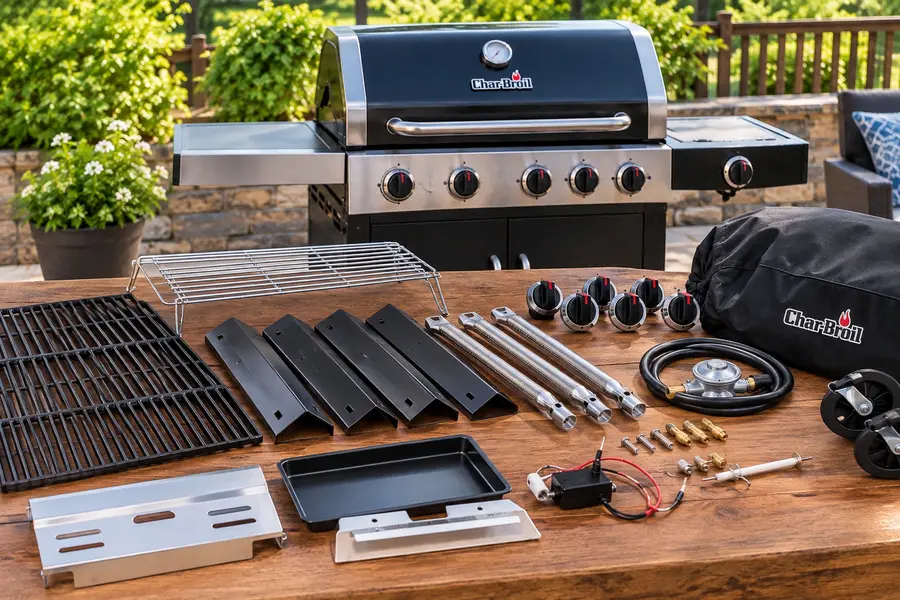
Char-Broil Grill Parts include the internal and external parts that make up the char-broil cooking system. This includes high heat operational parts like burners, heat tents, cooking grates, along with ignition modules, grease collection systems, and exterior parts.
Each part of an outdoor cooking appliance is designed to perform in a coordinated way with respect to the firebox dimensions needed for balanced airflow and controlled fuel delivery. Understanding their roles can aid in diagnosing heating issues and maintaining your outdoor grill in optimal condition.
Common Char-Broil Grill Parts and Their Functions
A conventional gas or hybrid barbecue is made up of several key components:
1. Char-Broil Burners
The burner tubes of the gas cooker are the engine. They are made of stainless steel or cast iron and lead the liquid propane or natural gas to small ports for an even flame. Carbon buildup food residue cause burner ports become clogged over time, causing hot spots uneven cooking.
2. Heat Tents and Flame Tamers
Angled heat tents (also known as heat shields or vaporizers) are essential to two important functions which occur directly above the burners. They shield burner tubes against corrosive sauces and fats and evenly spread out radiant heat over the cooking space. Dripped grease burns on a hot heat tent, producing smoky, aromatic flavor to foods.
3. Cooking Grates
Cooking grates need able hold heat non-gleasing surface. Specialized emitter plates under grates also included infrared models to prevent flare-ups.
4. Ignition Systems and Electrodes
The grill igniter system is comprised of a push-button spark generator, ignition wires and ceramic electrodes that are placed near the burner ports. A reliable spark makes it easy and safe to light fires, rather than using a lighter or matches.
5. Grease Management Components
Run-off fats and juices are funneled into the grease tray and drip cup which keeps them away from live flames and helps to prevent hazardous grease fires.
When Should Grill Parts Be Replaced?
Visual checks give you the opportunity to identify worn or damaged grill parts before they affect your grilling or become a safety hazard:
- Uneven or Weak Flames: If a soft brush does not return a crisp blue flame, the burners may be corroded and need replacement with new Char-Broil burners.
- Surface Rust – this is normal, but if there are holes or flaking rust on heat tents or firebox parts, it is a sign that a structural change is occurring and the parts must be replaced.
- Chipped Porcelain: This will expose bare iron and cause ongoing rusting, which may adhere to food.
No spark when replacing ignition battery cleaning electrode – If a spark not obtained after replacing ignition battery cleaning electrodes, ignition switch wiring assembly will need to be replaced.
How to Choose the Right Replacement Parts
Grill parts seldom universal. Follow these steps ensure proper fit:
- Find the Model Number: On product rating label, typically back of grill cart, inside cabinet door on back leg. Don’t use model name sole criterion, designs vary from year to year.
- Use Manufacturer Documentation: Use your user manual manufacturer’s parts diagram locate part specifications.
- Take measurements carefully: When ordering universal aftermarket grill replacement parts, measure length of burner tubes, width and depth of cooking grates, dimensions of heat plates.
Common Mistakes to Avoid
- Ordering by appearance: If you’ve been ordering parts by the photo, then you may end up with a return.
- Not fulling seating burner tubes over gas valve orifices can result in a serious fire hazard behind the burner’s control panel.
- Aggressive metal scraping with Harsh Wire Wheels can remove protective porcelain coatings from grates and heat shields.
Conclusion
Keeping and upgrading Char-Broil Grill Parts is a smart and cost-effective approach to ensure the safe and efficient functioning of your outdoor grill. You’ll get a better heat balance and eliminate the pesky flare ups by replacing rusted heat tents, old burners or broken cooktop grill plates.
Frequently Asked Questions
Where is model number of my Char-Broil grill?
Check back of cart frame, interior cabinet door back of firebox for silver white data label.
How many times should Char-Broil burners be changed?
Burner life is dependent on climate, frequency of use, and care and depends on the type of burner with stainless steel burners lasting for several seasons before replacement.
Q. May I use the same grill replacement parts on my Char-Broil grill?
OEM parts are guaranteed to fit and to heat correctly, but if the dimensions and mounting are the same, then universal parts can be used.
4. My grill’s igniter will not spark when I install new parts, why?
Make sure the battery is in good condition, the battery is connected the correct way and the electrode wire is securely inserted into the ignition module.
5. Remove rusted Char-Broil grill grates?
Wash grates warm water mild dish soap, use a nylon sponge to remove surface rust, dry completely lightly coat cooking oil.